Spoonful
2022
Empowering working university students

More than 19 million individuals are enrolled in colleges across the United States (Hussar et al., 2020). Much of the research on college students’ work and non-work lives has centered around work-school interactions, specifically focusing on work-school conflict. As college students ourselves, we decided to explore how work-school conflict affects daily routines and well-being, so we could design solutions that better support students’ needs and reduce friction between work and school responsibilities.
Role
Product Designer
UX Researcher
Team
Jade Xing-Fisher
Catherine Tinh
Project details
This was a one-month academic project. We conducted interview with 9 university students and performed usability testing.
Design research
01 Market research
To understand the current landscape of wellness apps and identify the unique features that the users are looking for, we aim to develop insights that can contribute to enhancing our own product that is tailored specifically to the needs of working university students.

Finch (left) -- a self care pet app helps users feel prepared and positive, consisting of mood tracking, goal settings, and practicing gratitude, which are all done by taking care of an adorable pet.
Wysa (right) -- an AI-based emotionally intelligent mobile chatbot app aimed at building mental resilience and promoting mental well-being using a text-based conversational interface.
02 User interview
We conducted 6 focus group sessions with 9 university students as interviewees who are currently working or have experiences of balancing school-work life. Most interviewees get anxiety from unfinished work and not eating proper meals through inability and forgetfulness. Some mentioned their needs of meditation and a reminder to get rest from the work, as well as some to-do list or structures for the day.

03 Human factors requirements
To meet the needs of helping working university students balance work and rest, an important consideration in the design of wellness app is the usability and human factors characteristics of the device interfaces and the user experience it provides for the user.
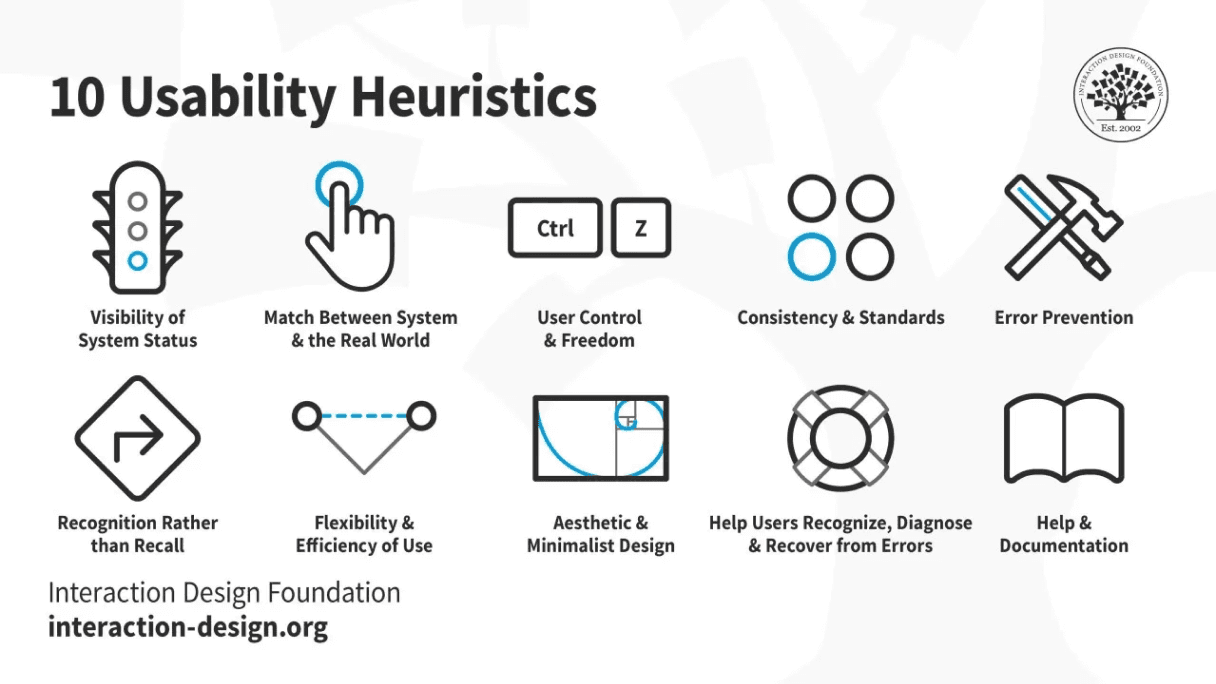
Nielsen’s usability heuristics (Langmajer, 2021)
Ideation
01 Concept creation
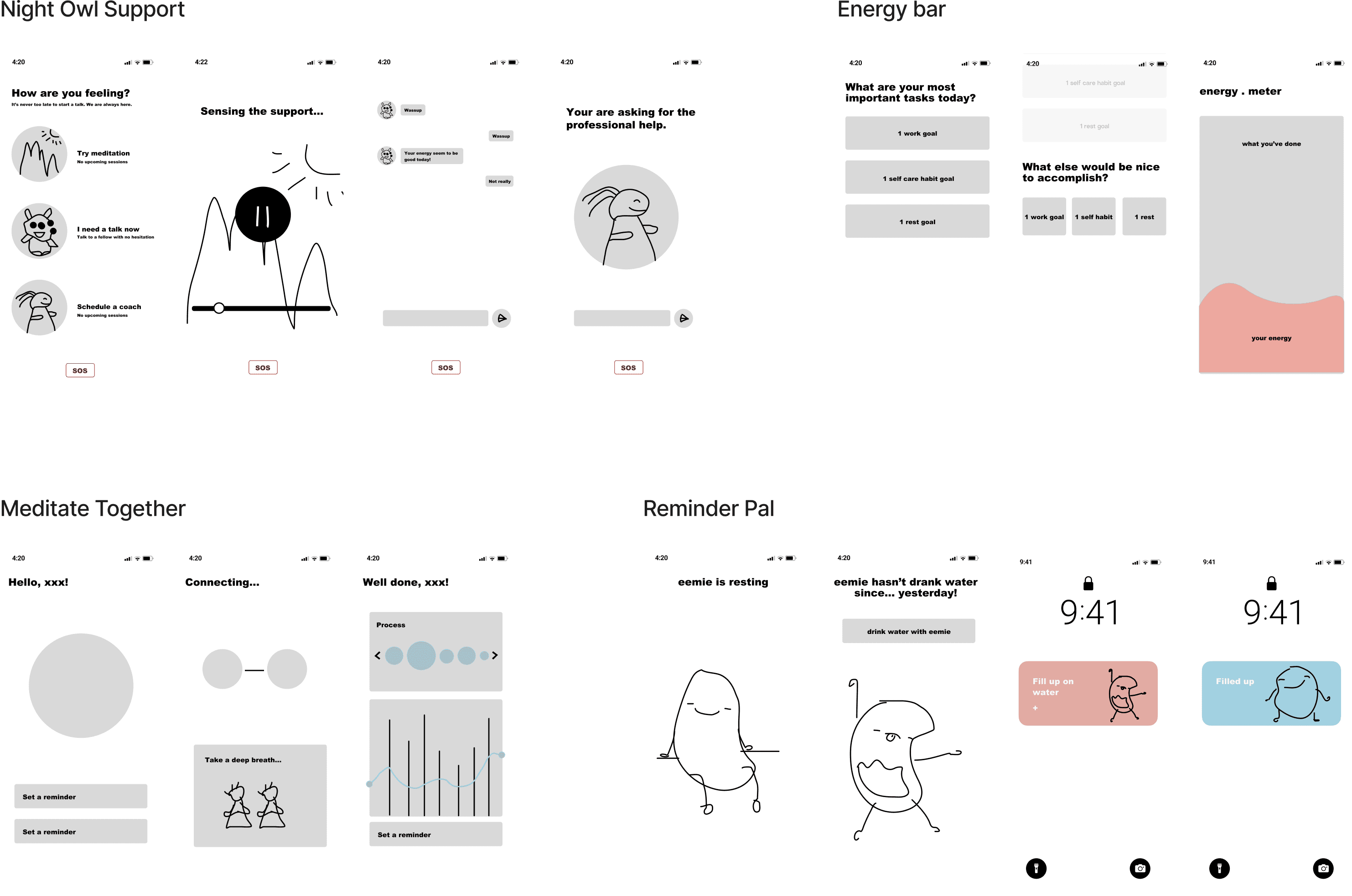
The goal of our low fidelity prototyping was to explore various user flows to achieve our goal. We received important insights and positive comments on combining the energy and notifications systems.

02 Low-fi prototype
02 User testing


Final design


